The Georgia Bulldog of Franchising: Franchisee Sets High Standards for Himself and his Team
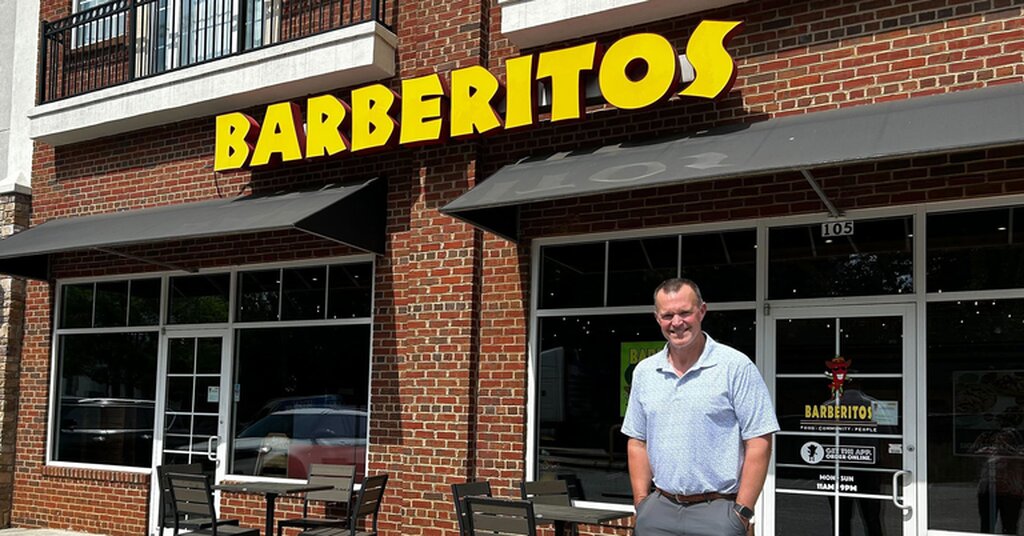
Name: David Weeks
Title: CEO
Company: The Bean Team
No. of units: 9 Barberitos, 8 Dunkin’, 4 Newk’s Eatery, 1 Dunkin/Newk’s co-brand
Age: 52
Family: Wife Erin, and kids, West, 22, Whit, 20, Zach, 17, and Kate, 12
Years in franchising: 22
Years in current position: 19
Launching into franchising without a shred of business ownership experience isn’t the usual path to success. But David Weeks made it work and then some. Two decades later, he looks back on that bold leap and sees a thriving portfolio of more than 20 restaurants across multiple brands.
Weeks first made his mark on the football field as a captain and three-year starter on the University of Georgia’s offensive line in the mid-1990s. After graduation, he traded his helmet for a career in pharmaceuticals. It was a good job, but the spark wasn’t there. Restless, he turned his attention to the restaurant world, exploring franchise opportunities that might ignite his passion.
The turning point came from a local newspaper. Flipping through the pages, Weeks spotted a photo of a former teammate rolling a burrito at a new Athens, Georgia, eatery called Barberitos. Curious, he stopped in, took a bite, and was instantly hooked. That burrito led him to an introduction with Downing Barber, the brand’s founder, who was ready to franchise the concept.
Weeks didn’t hesitate. Convinced of the brand’s potential and eager to dive into ownership, the former Bulldog opened the first Barberitos franchise a year later, kickstarting a restaurant career that’s still going strong.
“I’m grateful that Downing trusted and invested in me,” Weeks says. “I needed him as much as he needed me. I needed him to take a chance on me as a new owner, and he needed someone like me who was crazy enough to believe in his new concept. The stars aligned, and life is all about relationships.”
Just 15 months after launching his first restaurant, Weeks snapped up two more Barberitos locations. Growth wasn’t top of mind until a broker urged him to expand his portfolio with a Dunkin’ store.
“I enjoyed operating Barberitos, but the idea of adding a breakfast concept to go along with our lunch and dinner business made a lot of sense,” Weeks says. “I also thought I could learn a lot through a larger brand like Dunkin’. Everything happened organically. That door opened, and I decided to walk through it.”
Today, Weeks owns nine Barberitos, eight Dunkin’s, and four Newk’s Eateries standalone stores. This summer, he opened a Dunkin’/Newk’s co-branded location. Many of his restaurants are among the top-performing stores within their respective systems. He plans on opening an additional Barberitos and Dunkin’ over the next year, and he also recently signed an agreement with Guthrie’s to open four new stores in 2026.
All Weeks’ restaurants are located within four counties in Georgia and a 30-minute radius around Athens. They are close enough for him to frequently visit and meet with management at each location. For Weeks, the operation of his restaurants comes naturally through the foundational principles learned on the football field: hard work, leadership, and teamwork.
PERSONAL
First job: I like to say I always had an entrepreneurial spirit. I started my own landscaping company at 9 years old, pushing my lawn mower up and down the street, cutting my neighbors’ grass. One of the neighbors I did service for owned a Baskin-Robbins and hired me there to scoop ice cream and make milkshakes. My first official job coincidentally foreshadowed my career with Inspire Brands down the line.
Formative influences/events: I played college football at the University of Georgia, so my time growing up on the football field was an incredibly formative experience for me. I continue to apply the lessons I learned in teamwork, leadership, and grind to my career in the restaurant industry every day.
Key accomplishments: I am extremely proud of the longevity and strength of my team, many of whom have been with me for 15 years or longer. Their loyalty, talent, and accountability are the foundation of everything we’ve built and are the reason we have been able to grow and succeed as much as we have.
Biggest current challenge: Recruiting strong talent for management roles. I have high standards for my business and hold people accountable for their performance. As long as both sides are honest with each other, it is a very good relationship. We will not lower our standards for anyone.
Next big goal: We recently signed on with a fourth brand, Guthrie’s, and will be bringing four locations to Athens in the coming years.
First turning point in your career: When I decided to make the leap and leave a well-paying corporate job to follow my dream of owning my own business and becoming a restaurant owner.
Best business decision: My business grew exponentially when I learned how to properly delegate. I hold my team to high standards while empowering them to do the job their way.
Hardest lesson learned: I’ve had several failures in my career with a restaurant franchise in 2009 and my own concept, ShishkaBobby’s, back in 2008. I learned from these experiences that I need a proven playbook from people who are smarter and more experienced than I am.
Work week: I go hard Monday to Friday and will work on the weekends too, but I prioritize work-life balance by compartmentalizing and giving 100% to each side. The great thing about working for myself is that I can go to my daughter’s volleyball game at 4:30 p.m. on a Monday, but that might mean I have to catch up on payroll that night.
Exercise/workout: I exercise five days a week. I swim for an hour every single day and alternate between lifting weights and walking. My wife and I always go for a walk after dinner.
Best advice you ever got: “If everyone likes you, you are lying to someone.” Being a leader, it is important to be respected, but sometimes you need to make decisions that not everyone will like. When you hold a high standard and hold people accountable, they may not like it, but in the end, that is what makes companies successful.
What’s your passion in business? Seeing others succeed and accomplish things they never thought they could accomplish professionally and financially.
How do you balance life and work? I am a fanatic about not wasting a single minute of the workday, and I’m also good at multitasking during the workday. This enables me to have a life outside of work. I am so fortunate that my wife is supportive of the career path that I have chosen. She knows that if I need to take a call for work during family time, I need to take that call to make sure the business is running smoothly.
Guilty pleasure: Peanut M&Ms.
Favorite book: The Comfort Crisis: Embrace Discomfort to Reclaim Your Wild, Happy, Healthy Self by Michael Easter. People are most afraid of change, and this book challenges you to change and get out of your comfort zone.
Favorite movie: “Braveheart” and “Gladiator.”
What do most people not know about you? I love to raise goats and chickens. After a long day at work, it is therapeutic to just watch my goats and chickens as they go about their day.
Pet peeve: Dishonesty. Don’t tell me what you think I want to hear; tell me the truth. People have a tendency to want to please their boss. I want people to be honest and tell me what is going on in our stores.
What did you want to be when you grew up? I wanted to be a train engineer and drive trains.
Last vacation: My wife and I took our sons to the British Virgin Islands in July.
Person you’d most like to have lunch with: Abraham Lincoln. I would love to know how he kept it all together when our country was at its lowest. His leadership was just incredible.
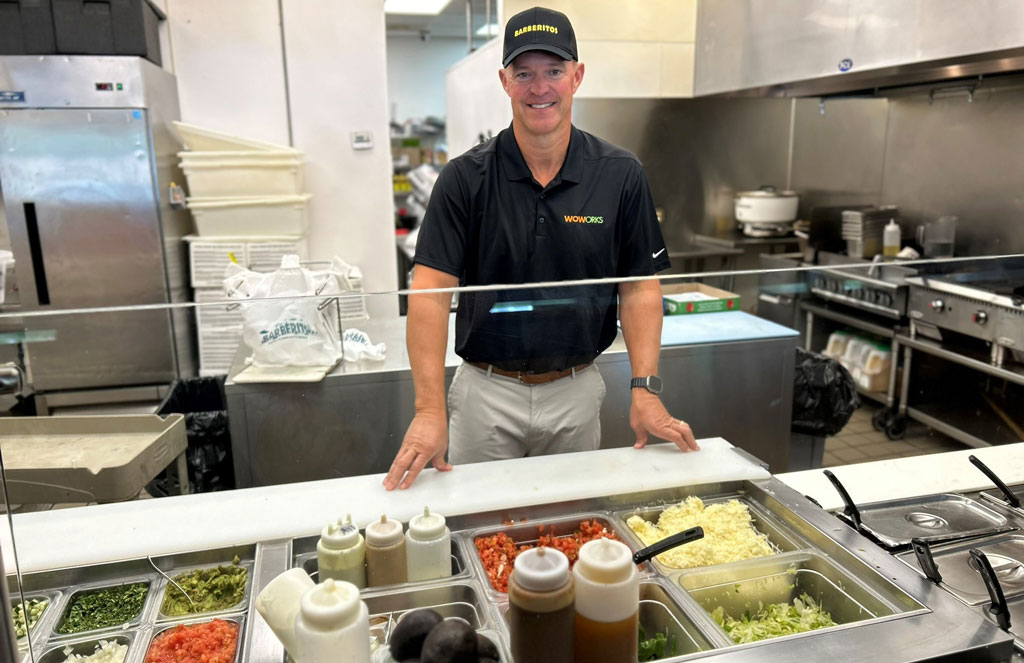
MANAGEMENT
Business philosophy: Do what’s right and be nice.
Management method or style: I’m hands-on from a macro level. I do not believe in micromanaging, so if I need to micromanage you, you will not like it and neither will I.
Greatest challenge: Finding people who have the same standards as I do. People may not know that I am my biggest critic. It is hard to find people who feel the same way about my business as I do. I want to have people who aren’t afraid to make mistakes but can figure out how to fix them if something goes wrong.
How do others describe you? As someone who is consistent, ethical, and a hard worker.
Have you ever been in a mentor-mentee relationship? What did you learn? Throughout my youth and through college, I was fortunate to be coached by many strong men of great character. These mentors taught me the importance of standards and showed me that adversity does not build character; it reveals it. It’s easy to be at your best when everything is going right, but it’s how you handle adversity when things go wrong that determines your success.
One thing you’re looking to do better: I am always looking to be a better communicator. One of my favorite sayings is, “When you point the finger, three fingers point back at you.” If someone makes a mistake, I try to think about what I could have done better to prevent it and if I communicated my vision clearly.
How do you give your team room to innovate and experiment? We are always looking for new ways to improve our business. As a franchisee, I will never alter the recipes, but how we execute the franchisor playbook is up to my team and me. We are highly focused on using technology to streamline all our operations.
How close are you to operations? I am in my restaurants every day. I have a corporate office above one of our stores and try to visit each of our restaurants on a weekly basis. One of my favorite mottos is “Inspect what you expect.” As an owner, how can you know what goes on in your stores if you are never there?
What are the two most important things you rely on from your franchisor? Great products and high standards across the franchisee community. Guests know the brand, not the franchise owners, so if they have a bad experience at a store in a different town than where I operate, they will not come eat with us at ours.
What you need from vendors: Communication. If a delivery is going to be late or if they are out of a certain product, we need to know so that we can make adjustments.
Have you changed your marketing strategy in response to the economy? How? My marketing strategy has been consistent for 22 years: If we support our community, they will support us back. We donate a lot of money and food to various organizations within our communities, and it’s proven to be a successful strategy.
How is social media affecting your business? We need to do a better job at engaging in social media. Personally, I am not on much social media, but I do realize that is the way of the world now. We do read all the comments, and when we get negative feedback, I view this as an opportunity for us to get better.
In what ways are you using technology (like AI) to manage your business? I am grateful that the brands I’m involved with all have great apps that streamline our guest experience, making it easy to order online and use third-party delivery platforms. Thanks to technology, there are so many ways for guests to experience our product. If you are not embracing it, you will fall behind.
How do you hire and fire? We put a lot of thought and energy into our hiring and training process both for crew members and management positions. I still take part in all management interviews because I work closely with and have a relationship with each store’s GM. I want to give people every opportunity to succeed, but if a role is not working out, our standard is that when we fire someone, they need to know it’s coming and understand why they are being let go.
How do you train and retain? Training never ends with us. I am learning things every day, and my team should be doing the same. Retention is incredibly important to me, and I start by holding people accountable from the beginning and upholding high standards. If a team member makes it six months with us, they will likely be with our company as long as they want.
How do you deal with problem employees? I am very transparent and am not afraid to have difficult conversations, especially if it can improve job performance. I like to give people every chance to improve and succeed, but if a problem continues, it’s up to me to let them go. One bad apple can spoil the whole bunch.
Fastest way into your doghouse: Lie to me.
BOTTOM LINE
Annual revenue: We are on track to hit $31 million this year.
Goals over the next year: Over the next year, we are slated to open another Barberitos, another Dunkin’, and our first Guthrie’s location.
Growth meter: How do you measure your growth? While I do track everything, I measure growth by the quality of our restaurants, not the quantity. We only expand when the right people are in place and want to grow alongside us.
Vision meter: Where do you want to be in five years? 10 years? I don’t have a specific projection for the number of units I operate. I love people on my team having success. I’m not opening restaurants to put money in my pocket; I’m doing it for other people to make a living. I love what I’m doing and building the business.
Do you have brands in different segments? Why/why not? All my brands are in the restaurant industry. I love the restaurant business. To me, it’s not only an investment, but a lifestyle where I can have all my friends over for lunch and dinner.
How is the economy in your region(s) affecting you, your employees, your customers? It has had a positive impact. The economy in Georgia is very strong. Doing business in Athens, where the University of Georgia is located, has been extremely beneficial for us. We have new employees and new customers walking through our doors every year. Athens takes great care of us, and we take great care of them.
Are you experiencing economic growth in your market? Yes. It has been consistently good due to the market in which we are located.
How do changes in the economy affect the way you do business? Tariffs have had a large impact on our businesses. They’ve affected the price of coffee beans, tomatoes, and avocados. We need to reevaluate our pricing structure, operations, and more to make sure we are still profiting while providing a quality experience for our customers.
How do you forecast for your business? We are very data driven, and all our decisions are based on the numbers. We are aware of the school calendar, and we can always project that business will be slower in the summer. We look at speed of service, drive-thru times, and customer feedback.
What are the best sources for capital expansion? If I can’t do it myself, I have two strong local banking relationships that help with funding.
Experience with private equity, local banks, national banks, other institutions? Why/why not? I do not work with private equity. I do have relationships with local banks. They are great and eat with me at our restaurants all the time.
What are you doing to take care of your employees? Since our stores are in a college town, a lot of our crew are college students, so we have very flexible scheduling. For our management team, we provide benefits such as health insurance and optional life and disability insurance. We also have a retirement program. We want our team members to have careers with us, and the bottom line is that we treat our people with respect, which goes a long way in today’s environment.
How are you handling rising employee costs (payroll, minimum wage, healthcare, etc.)? I absorb the rising employee costs because investing in people is nonnegotiable. We offer healthcare, PTO, and a retirement program. We want to have all the things in place to attract the best people.
What laws and regulations are affecting your business, and how are you dealing with them? Drive-thrus are a major part of our business model, so when we are looking to expand, we have to be aware of local ordinances that regulate them.
How do you reward/recognize top-performing employees? We have an employee of the month. When we have an excellent shift, we’ll buy the whole staff a good meal to recognize their hard work.
What kind of exit strategy do you have in place? After 22 years, I still love what I do and don’t see myself leaving, so I don’t currently have an exit strategy. I figure I’ll start considering an exit strategy in the next 10 years if I even want to have one.
Share this Feature


Recommended Reading:

| ADVERTISE | SPONSORED CONTENT |
FRANCHISE TOPICS
- Multi-Unit Franchising
- Get Started in Franchising
- Franchise Growth
- Franchise Operations
- Open New Units
- Franchise Leadership
- Franchise Marketing
- Technology
- Franchise Law
- Franchise Awards
- Franchise Rankings
- Franchise Trends
- Franchise Development
- Featured Franchise Stories
FEATURED IN

Multi-Unit Franchisee Magazine: Issue 4, 2025

| ADVERTISE | SPONSORED CONTENT |


$250,000
$100,000

Franchising.com is produced by Franchise Update Media. Franchise Update Media has its finger on the pulse of franchising with unrivalled audience intelligence and market driven data. No media company understands the franchise landscape deeper than Franchise Update Media.
1201 New York Avenue NW, Suite 300A
Washington, DC 20005
PH. (408) 402-5681
 The multi-unit franchise opportunities listed above are not related to or endorsed by Multi-Unit Franchisee or Franchise Update Media Group. We are not engaged in, supporting, or endorsing any specific franchise, business opportunity, company or individual. No statement in this site is to be construed as a recommendation. We encourage prospective franchise buyers to perform extensive due diligence when considering a franchise opportunity.
Copyright © 2001 - 2026. All Rights Reserved. Legal Notices | Privacy Policy


